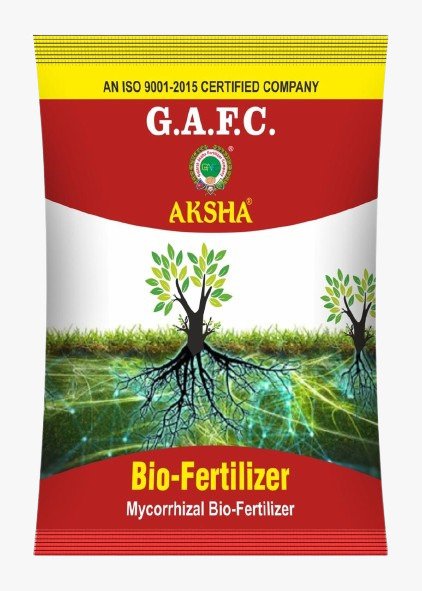
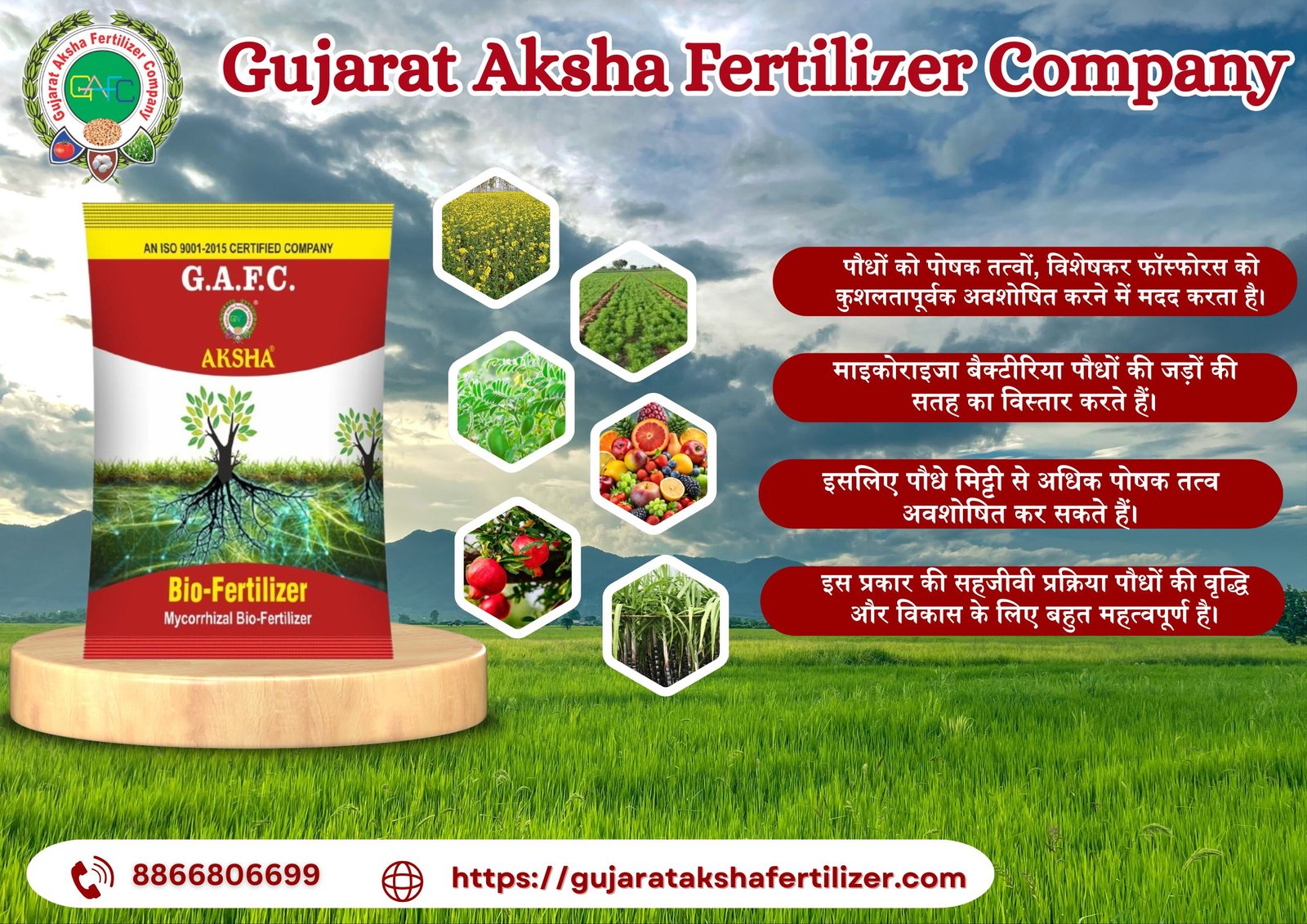
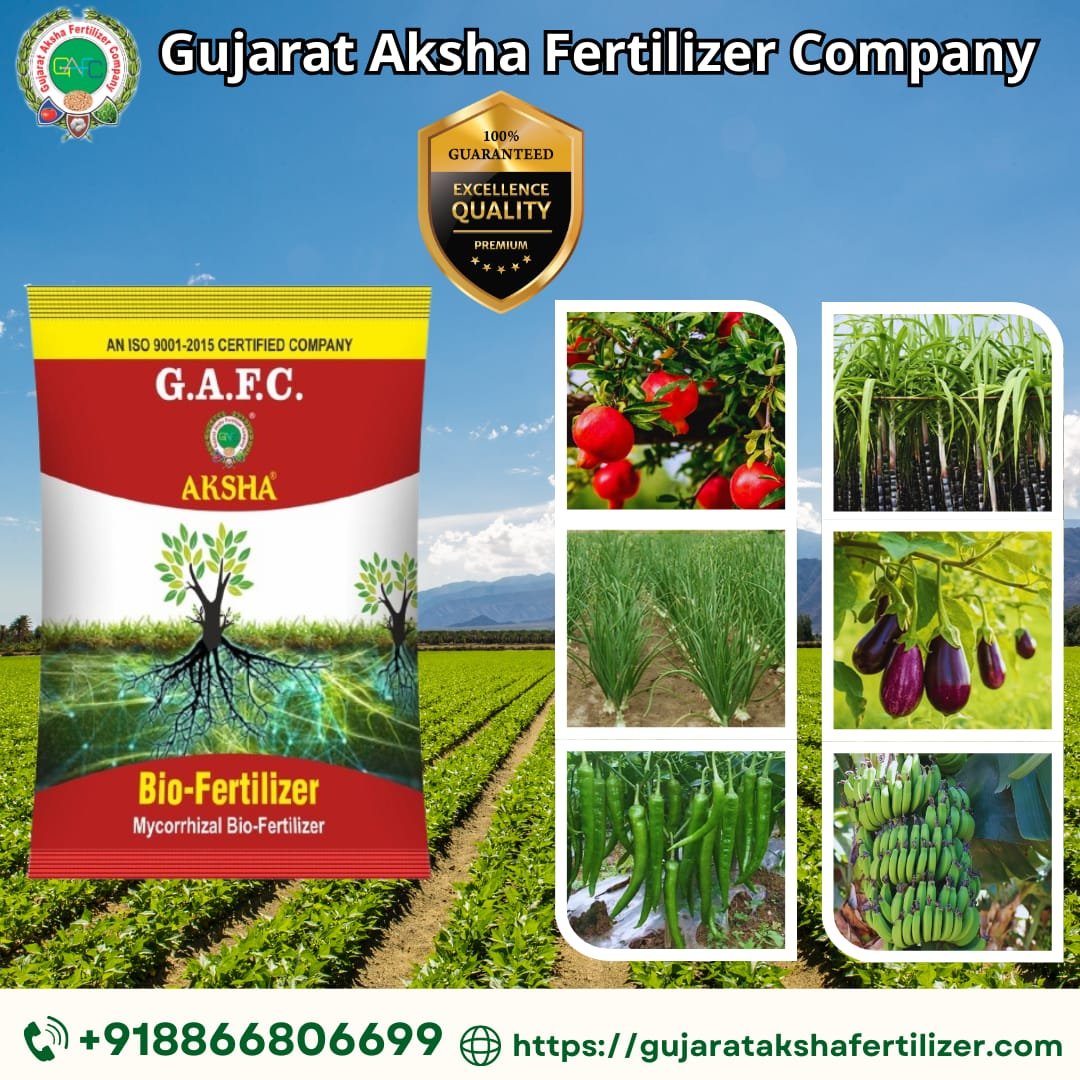
.jpeg)
Mycorrhizal Bio fertilisers | ||
(1) | Total viable spores/gram of product. | Minimum 10 viable spore per gram of finished product |
(2) | PH | *5.0-7.0 |
(3) | Inocculum potential | 1200 IP per gram of finished product by MPN method with 10 fold dilution |
- Enhanced Nutrient Uptake: Extends root surface area through a vast hyphal network, specifically increasing the absorption of immobile nutrients like Phosphorus (P), Zinc (Zn), Copper (Cu), and Iron (Fe).
- Improved Water Absorption & Drought Tolerance: Fungal hyphae reach soil pores inaccessible to plant roots, significantly enhancing water uptake and helping crops survive dry spells.
- Soil Structure Improvement: Produces glomalin, a sticky glycoprotein that binds soil particles, improving soil aggregation, aeration, and water-holding capacity.
- Reduction in Chemical Dependency: Decreases the need for phosphatic fertilizers by 30–40%.
- Disease Suppression: Creates a physical barrier around roots and secretes antibiotics that protect plants against soil-borne pathogens and nematodes.
- Increased Crop Yield & Quality: Results in stronger root systems, uniform growth, and higher yields in cereals, vegetables, and fruit trees.
- Stress Resistance: Improves plant tolerance to adverse conditions such as salinity and high soil toxicity.
- Application Methods: Can be applied via seed treatment, soil application (mixed with compost), or root dipping of seedlings.
- Enhanced Nutrient Uptake: Dramatically improves absorption of immobile nutrients, particularly Phosphorus (P), as well as Zinc, Copper, and Magnesium.
- Increased Water Absorption: Fungal hyphae reach into small soil pores, increasing water uptake and improving drought tolerance.
- Root System Development: Promotes extensive root branching and healthier, more developed root systems.
- Improved Soil Structure: Produces glomalin, a sticky protein that binds soil particles, improving soil aggregation, aeration, and water holding capacity.
- Reduced Fertilizer Dependence: Can reduce the need for chemical Phosphorus fertilizers by 25–40%, cutting costs and reducing environmental pollution.
- Disease & Stress Protection: Strengthens immunity against root-borne pathogens and increases resistance to salinity and environmental stress.
- Higher Yields & Quality: Leads to stronger plants, higher crop yields, and improved crop quality.
- Better Transplant Success: Reduces transplant shock in nursery seedlings.